How much does it cost to have an oil tank removed from the ground?
Above ground oil tank removal costs typically range from $500 to $2,500 depending on tank size, accessibility, site conditions, and whether concrete pad demolition or soil remediation is required. Factors affecting price include tank capacity (275-gallon residential tanks versus larger commercial installations), proximity to structures, ease of equipment access, disposal fees, and the need for environmental testing or contaminated soil removal. At Rossini Equipment Corp, we provide detailed on-site assessments and transparent estimates tailored to your specific property and tank condition across Sullivan County and Orange County.
Do I need a permit to remove an above ground oil tank in New York?
While above ground tank removal typically requires fewer permits than underground tank extraction, you should still check with your local building department and notify your heating oil supplier before decommissioning any tank. New York State Department of Environmental Conservation (DEC) regulations govern proper disposal of tanks and any contaminated materials. Rossini Equipment Corp handles all regulatory compliance aspects, including proper documentation, approved disposal facilities, and coordination with local authorities to ensure your Sullivan County or Orange County tank removal meets every legal requirement without delays or violations.
How long does above ground tank removal take?
Most residential above ground oil tank removals are completed in one day, typically requiring 4-6 hours from arrival to final site cleanup. Larger commercial tanks or projects requiring extensive concrete pad demolition, soil remediation, or challenging site access may extend to 1-2 full days. Our experienced crews arrive with all necessary equipment, minimize disruption to your property, and complete the work efficiently. We coordinate timing around your schedule and Hudson Valley weather conditions to ensure safe, thorough removal without rushing critical safety or environmental protection steps.
What happens to the tank after it's removed?
After safe extraction, above ground oil tanks are transported to approved recycling and disposal facilities where they're processed according to New York State environmental regulations. Metal tanks are typically cut up and recycled as scrap steel, while any residual oil or contaminated materials are handled through licensed waste management facilities. Rossini Equipment Corp provides full documentation of proper disposal, including manifests and certificates of recycling, ensuring you have a complete compliance record for property transfers, insurance purposes, or future construction permitting requirements.
Can you remove tanks in tight spaces or difficult-to-access locations?
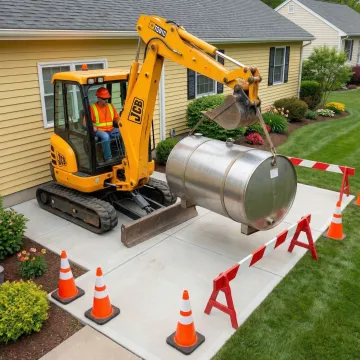
Yes, our fleet includes compact excavators and skid steers specifically suited for residential properties with limited access, narrow driveways, or tanks positioned close to buildings. With decades of Sullivan County excavation experience, our operators navigate challenging Hudson Valley terrain, protect landscaping and structures, and safely extract tanks from basements, hillside locations, or areas with overhead obstacles. We assess every site individually and bring the right equipment and expertise to complete your tank removal safely, regardless of property constraints or difficult access conditions.
What if my tank is leaking or the soil is contaminated?
If we discover leaks or soil contamination during tank removal, we immediately implement containment measures and follow New York State DEC spill reporting protocols. Our excavation capabilities allow us to remove contaminated soil, properly dispose of affected material at approved facilities, and backfill with clean fill to remediate the site. We handle all environmental documentation, coordinate with regulatory agencies if required, and work with environmental consultants when testing or more extensive remediation is needed—ensuring your Sullivan County property is restored safely and in full compliance with state environmental standards.
Do you provide site restoration after tank removal?
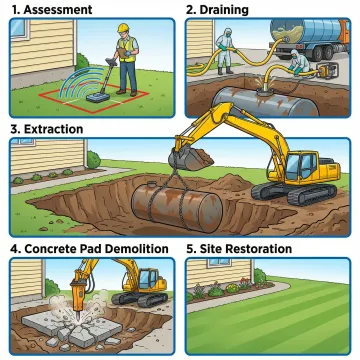
Absolutely. Complete site restoration is a core part of our tank removal service. After extracting the tank and demolishing any concrete mounting pad, we grade and compact the area, backfill with appropriate fill material, and restore proper drainage slopes to match your existing property contours. Our goal is to leave your site level, stable, and ready for landscaping, new construction, or whatever comes next. With our own hauling and grading equipment, we handle restoration efficiently without waiting on subcontractors—keeping your project on schedule from start to finished site.
Why should I remove an old above ground oil tank?
Even above ground tanks deteriorate over time, developing rust, cracks, and weak spots that can lead to leaks, environmental contamination, and costly cleanup. Removing old, unused tanks eliminates these risks, frees up valuable property space, and prevents future liability issues during property sales or insurance renewals. Many homeowners and commercial property owners across Sullivan County remove tanks when switching to natural gas, upgrading heating systems, or preparing sites for construction. Proactive removal protects your property value, eliminates environmental hazards, and ensures compliance with evolving New York State safety and environmental regulations.