What is involved in AST tank removal?
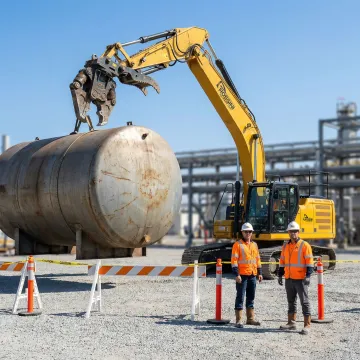
AST tank removal involves several critical steps to ensure safety and environmental compliance. First, the tank is completely drained and cleaned to remove all residual product and vapors. We then disconnect all piping, electrical connections, and associated equipment. Our excavation crews provide safe access and support for lifting equipment. The tank is carefully extracted using appropriate rigging and heavy equipment, then transported for recycling or disposal at a licensed facility. Finally, we handle site cleanup, soil testing if required by New York State DEC, and restoration of the area. Throughout the process, we follow strict safety protocols and document all work for regulatory compliance.
How long does an AST tank removal project typically take?
Most straightforward AST tank removals in Sullivan and Orange Counties can be completed in 1-3 days, depending on tank size, site access, and environmental conditions. The timeline includes mobilization of equipment, tank decommissioning, physical removal, and initial site cleanup. Larger tanks, challenging access situations, or sites requiring soil remediation may extend the project to a week or more. We provide detailed project timelines during our initial site assessment, accounting for factors like weather, permit processing, and disposal facility scheduling. Our experienced crews work efficiently to minimize disruption to your operations while never compromising on safety or compliance.
Do I need permits for AST tank removal in New York?
Permit requirements for AST tank removal vary by tank size, contents, location, and local regulations in Sullivan and Orange Counties. Tanks that stored petroleum products typically require notification to the New York State Department of Environmental Conservation (DEC), and you may need a tank closure permit depending on capacity and age. Commercial and industrial sites often require additional permits from local fire marshals and building departments. We work closely with environmental consultants and local authorities to identify all required permits for your specific project, assist with documentation, and ensure full compliance. Our decades of experience with tank projects means we understand the regulatory landscape and can help navigate the permitting process smoothly.
What happens to the removed AST tank?
Removed AST tanks are transported to licensed recycling or disposal facilities, depending on their condition and the materials they stored. Steel tanks in good condition are typically sent to metal recycling facilities where they're cleaned, cut up, and processed for scrap. Tanks that stored hazardous materials or show significant contamination must be disposed of at specialized facilities permitted to handle such waste. We maintain relationships with certified disposal facilities throughout New York State and handle all transportation and disposal documentation. You'll receive copies of disposal receipts and manifests for your records, ensuring a complete chain of custody and demonstrating environmental compliance. Our disposal practices meet all EPA and New York State DEC requirements.
Can you handle tank installation as well as removal?
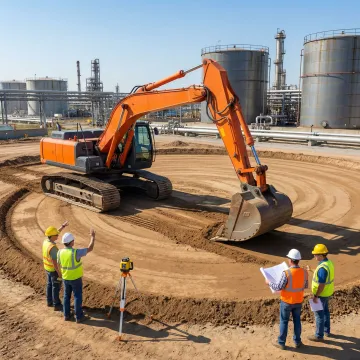
Yes, Rossini Equipment Corp provides complete AST tank installation services throughout Sullivan and Orange Counties. We handle site preparation including excavation and grading for proper drainage, foundation construction to manufacturer specifications, precision placement and leveling of new tanks, installation of secondary containment systems when required, coordination with plumbers and electricians for connections, and final backfilling and site restoration. Our experienced operators use modern excavation equipment to prepare sites even in challenging terrain or tight access situations. We ensure all installation work meets New York State codes, manufacturer requirements, and local regulations. Whether you're replacing an old tank or installing a new system, we provide turnkey solutions from site prep through final inspection.
What size AST tanks can you remove or install?
Our fleet of excavators, loaders, and lifting equipment can handle AST tanks ranging from small 250-gallon residential heating oil tanks to large commercial and industrial tanks exceeding 20,000 gallons. We regularly work with standard fuel oil tanks (275-500 gallons), mid-size commercial tanks (1,000-5,000 gallons), and large industrial storage tanks used for diesel, heating oil, waste oil, and other petroleum products. Tank size affects the equipment we deploy, the number of crew members required, and project duration. During our free site assessment, we evaluate tank dimensions, weight, site access, and lifting requirements to develop a detailed work plan. Our experience with tanks of all sizes means we can adapt our approach to handle unique configurations or challenging removal situations.
How much does AST tank removal cost?
AST tank removal costs in Sullivan and Orange Counties typically range from $1,500 to $8,000 or more, depending on tank size, accessibility, soil conditions, and disposal requirements. A standard 275-500 gallon residential tank in open, accessible terrain generally costs $1,500-$3,000. Larger commercial tanks (1,000-5,000 gallons) range from $3,000-$6,000. Tanks requiring crane access, extensive excavation support, contaminated soil handling, or hazardous material disposal will increase costs. We provide free on-site assessments and detailed written estimates that break down all costs—mobilization, labor, equipment, disposal fees, and any required testing or documentation. Our transparent pricing ensures no surprises, and our efficient crews minimize labor costs while maintaining the highest safety and compliance standards.
What areas does Rossini Equipment Corp serve for tank services?
We provide AST tank removal and installation services throughout Sullivan County (including Monticello, Liberty, Wurtsboro, Rock Hill, Fallsburg, Bloomingburg, and Livingston Manor) and Orange County (including Middletown, Goshen, Port Jervis, Wallkill, Warwick, Florida, Monroe, and Chester). Our headquarters in Monticello allows us to respond quickly throughout the Hudson Valley region. We also serve surrounding areas on a project basis. With our own transportation fleet and equipment yard, we can mobilize efficiently to your site with minimal coordination headaches. Our deep roots in Sullivan County since 1963 mean we understand local geology, regulations, and seasonal challenges—knowledge that helps us complete tank projects smoothly and efficiently.